Key Points
- Place your Christmas cactus in bright, indirect light—too much or too little can stop blooms.
- Use well-draining, nutrient-rich soil and repot every three years.
- Avoid temperature swings, water more in winter, and skip fertilizer during blooming.
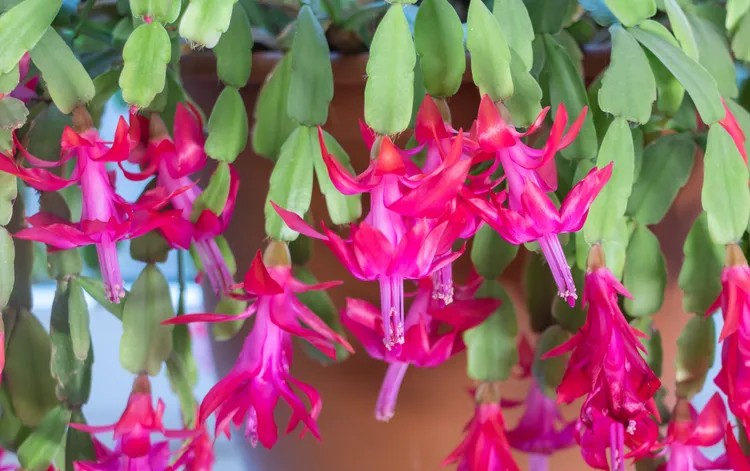
The Christmas cactus (Schlumbergera x buckleyi) is a lush, long-lived succulent plant that produces colorful flowers of pink, red, salmon, fuchsia, or white during winter, making it a favorite of houseplant enthusiasts. It's often given as a Christmas or birthday gift to plant lovers, in the hopes that they will enjoy its beautiful blooms for years to come.
Though these are relatively easy-care plants, the Christmas cactus needs proper growing conditions to ensure it remains healthy. One fairly common complaint about these plants is that they don't always bloom reliably every year. We've gathered some of the most common reasons for why your Christmas cactus isn't blooming, and tips for how to address these issues.
Inadequate Light, or Too Much Light
The Christmas cactus thrives in bright, indirect light. Too little light can decrease flower bud formation, while too much bright light can stress the plant and also affect flowering. The ideal placement is about three feet from a sunny window that faces east or west.
Adding a sheer curtain to the window will diffuse light so your Christmas cactus doesn't get too much sun, especially in the afternoon. In winter when sunlight is less abundant, it can be helpful to gently rotate your Christmas cactus every few days to ensure it gets adequate sunlight exposure on all sides.
Poor Soil Conditions
Though the Christmas cactus is a succulent, it doesn't require a sandy soil. But it does need good drainage, a loamy texture, and a slightly acidic pH.
Christmas cacti naturally grow in crevices and pots where decayed plant material has accumulated, providing a source of composted matter for nutrients, so your potting soil should mimic these conditions.
Ideally, you should use a high quality potting soil with some perlite added for drainage, and coarser materials for moisture retention that won't lead to soggy soil, like coconut coir or shredded pine bark. Mix up a new batch of potting mix when you repot your Christmas cactus, which should be done about every three years.
Extreme Temperatures
Christmas cacti like warmth: their ideal temperature is between 70 to 80F year round. Perhaps this is why plant lovers in colder regions love them: they provide a burst of summer-like beauty in the dead of winter. But winter can be a stressful time for these tropical heat lovers, due to potential exposure to extremes of cold or heat.
Be careful not to put your Christmas cactus near a cold drafty window or doorway, or too close to a heating source like a radiator or wood stove. Sudden or intense blasts of heat or cold air can stress your Christmas cactus and cause it to lose buds or make it less healthy.
Too Much or Too Little Water
Watering a Christmas cactus must be done carefully to avoid overwatering, which might lead eventually to root rot. Waterlogged soil may also may be behind its failure to bloom. Underwatering is also a potential issue, especially in winter when the plant needs more water, and dry heated air might cause soil to dry out more quickly.
Since it's technically a tropical succulent, the Christmas cactus does need a fair amount of water, compared to other succulent houseplants such as cactus or sedum. One important thing to know is that this plant has different watering needs depending on its growth cycle.
From March through October, you can water it once every two weeks, waiting until the top inch of soil is dry to the touch and then giving it a good soak (but don't drench it).
From November through February, which is the blooming season, watering should be increased to once a week, with the soil being consistently moist but not wet.
Inappropriate Fertilizing
Though a Christmas cactus does benefit from applying a 20-20-20 balanced fertilizer (diluted to 50% strength) in spring and summer, it should not be fertilized during the blooming season. Since many gardeners use fertilizer on outdoor plants in spring to boost flower blooms, the common assumption is that this would also help an indoor flowering plant to bloom. Some people even add sugar to the water, thinking this will help feed flower buds.
But fertilizing or overfeeding a Christmas cactus in the winter season can cause root burn or other problems, including causing buds to drop. The gorgeous blooms of this plant happen at the end of its yearly growth cycle, so you should wait and fertilize your Christmas cactus when new growth appears in spring.